

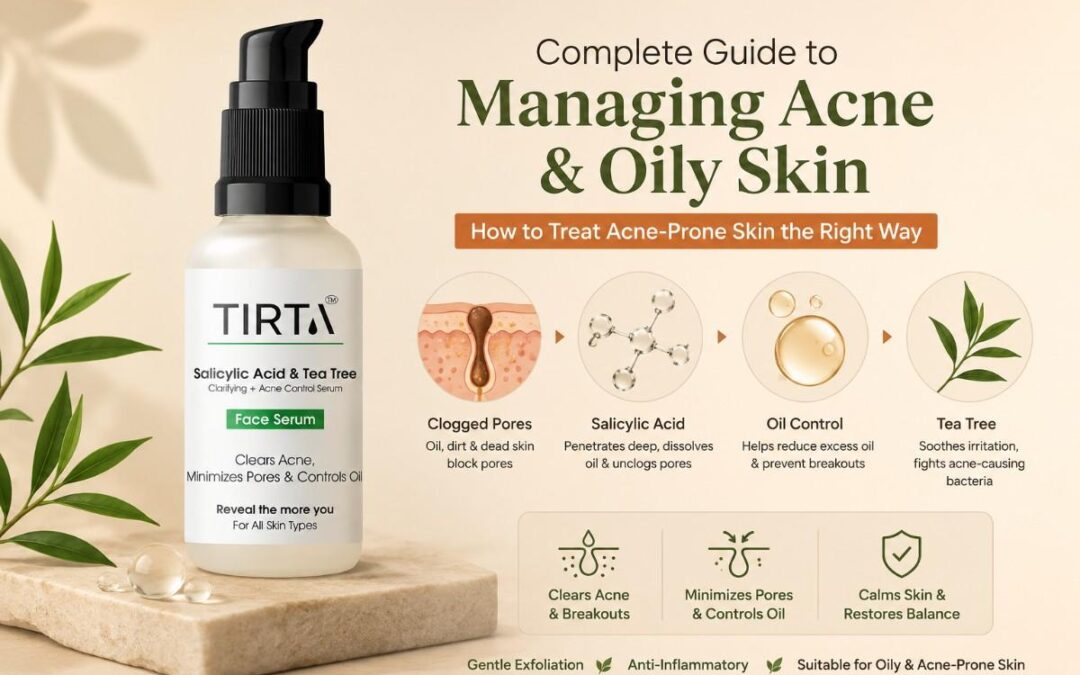
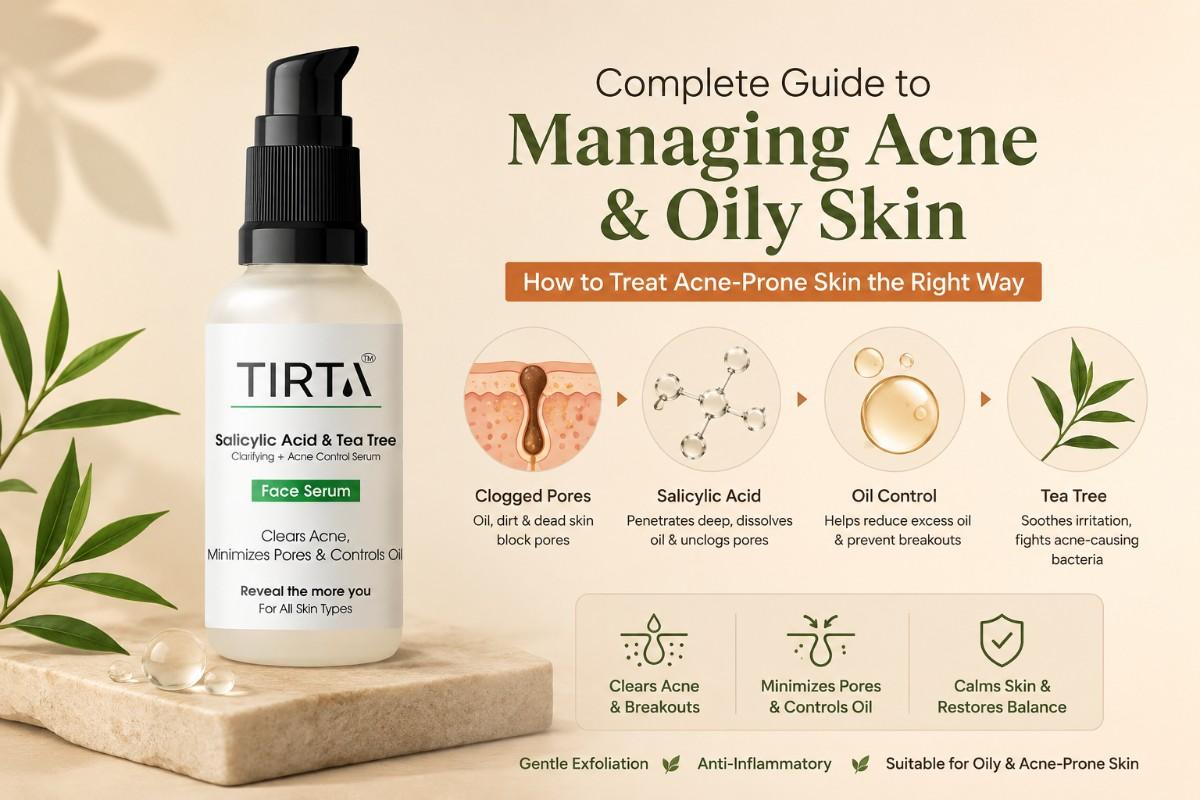
Acne & Oily Skin. Why It Feels So Hard to Control
Acne and oily skin often go together. If your skin feels greasy by midday and you keep getting breakouts, you are not alone. The problem is not just oil. It is how oil interacts with your skin.
What is acne-prone skin?
- Skin that easily develops:
- Pimples
- Blackheads
- Whiteheads
- Usually linked to clogged pores and excess oil
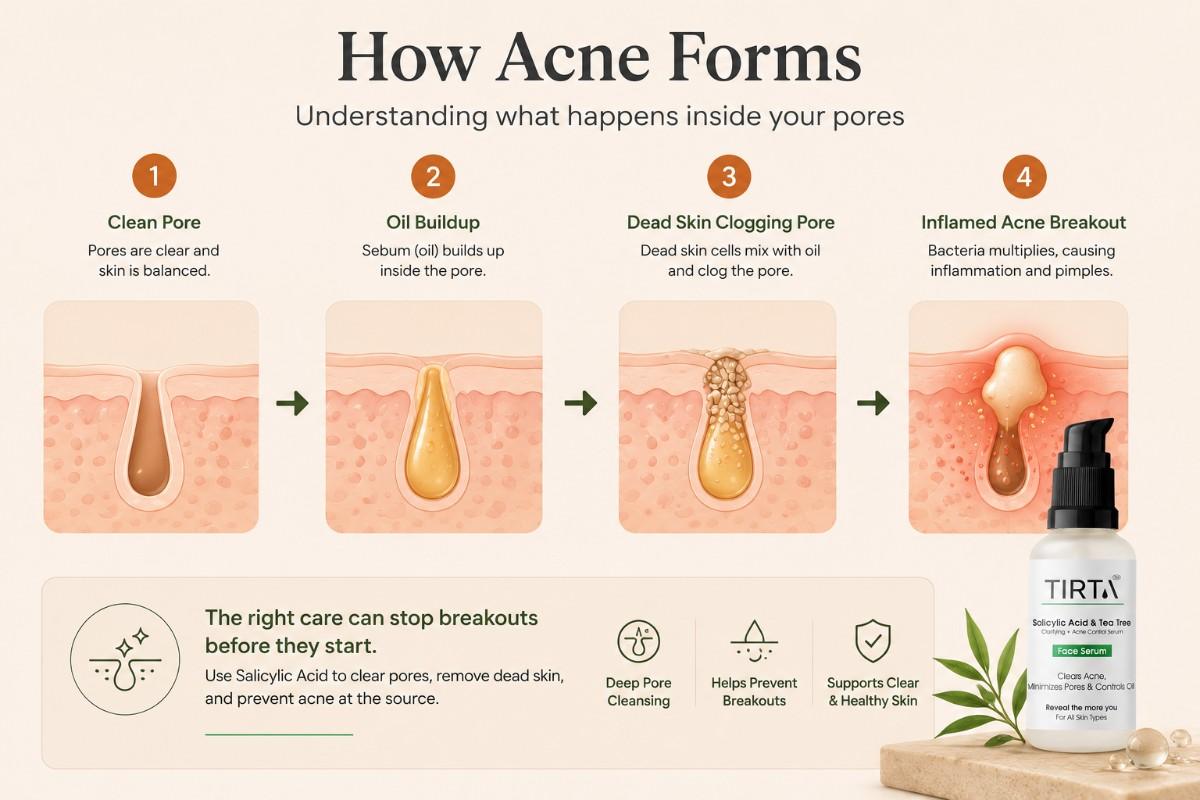
Why oily skin leads to acne
- Your skin produces more sebum (oil)
- Oil mixes with dead skin + dirt
- This blocks pores
- Blocked pores turn into acne
In simple terms:
Oil + dead skin = clogged pores = breakouts
The mistake most people make
- Over-washing face
- Using harsh products
- Skipping moisturiser
👉 This actually increases oil production, making acne worse
Types of Acne You Should Know
Not all acne is the same. Treating them correctly starts with identifying them.
Whiteheads & Blackheads
- Caused by clogged pores
- Non-inflammatory
Papules & Pustules
- Red, inflamed pimples
- Often painful
Cystic Acne
- Deep, severe acne
- Can leave scars
Why this matters:
Different acne types need different care. Not everything needs strong treatment.
What Causes Acne? (Root of the Problem)
1. Excess Oil Production
- Overactive oil glands
- Common in oily skin
2. Dead Skin Build-Up
- Skin does not shed properly
- Blocks pores
3. Bacteria Growth
- Bacteria thrive in clogged pores
4. Lifestyle Triggers
- Stress
- Diet
- Hormonal changes
Acne is not caused by one thing. It is a combination of factors
How Salicylic Acid Helps Acne-Prone Skin
What does salicylic acid do for acne?
- Penetrates deep into pores
- Dissolves oil and dead skin
- Unclogs pores
- Reduces breakouts
Why it works so well
Salicylic acid is oil-soluble. This means:
- It can go inside pores
- Clean from within
- Prevent future acne
How often should you use it?
- 2–3 times per week
- Not daily
Overuse can damage your skin barrier and increase oil production
If you are looking for a gentle acne solution:
Explore a salicylic acid serum designed for oily and acne-prone skin
How Tea Tree Oil Supports Clear Skin
Is tea tree oil good for acne?
- Helps reduce acne-causing bacteria
- Calms irritation
- Supports clearer skin
Why it works well with salicylic acid
- Salicylic acid → clears pores
- Tea tree → soothes and reduces inflammation
Best Ingredients for Acne-Prone Skin
Not all acne treatments are the same. Choosing the right ingredient matters.
Salicylic Acid
- Best for oily skin
- Unclogs pores
Benzoyl Peroxide
- Kills acne bacteria
- Can be drying
Niacinamide
- Controls oil
- Strengthens skin barrier
AHAs (Glycolic, Lactic Acid)
- Surface exfoliation
- Improves texture
Retinoids
- Long-term acne control
- Improves cell turnover
Which ingredient is best for acne?
- Oily skin → Salicylic acid
- Sensitive skin → Niacinamide
- Severe acne → Benzoyl peroxide
👉 The key is balance, not strength
Simple Skincare Routine for Acne & Oily Skin
This is where most people get confused. Keep it simple.
Morning Routine
- Gentle cleanser
- Vitamin C (optional)
- Lightweight moisturiser
- Sunscreen (SPF 30+)
Sunscreen prevents acne marks from darkening
Night Routine
- Cleanser
- Salicylic acid (2–3 times/week)
- Niacinamide (on alternate days)
- Moisturiser
Weekly Care
- Clay masks (1–2 times/week)
- Gentle exfoliation
Best routine for acne-prone skin
Morning:
- Cleanse + moisturise + sunscreen
Night:
- Cleanse + treat (salicylic acid) + hydrate
Common Skincare Mistakes That Make Acne Worse
❌ Over-washing your face
→ Triggers more oil production
❌ Skipping moisturiser
→ Skin becomes dehydrated and produces more oil
❌ Using too many actives
→ Leads to irritation
❌ Picking acne
→ Causes scars and inflammation
Lifestyle Factors That Trigger Acne
Diet
- High sugar and dairy may trigger breakouts
Stress
- Hormonal changes increase oil
Hygiene
- Dirty pillowcases
- Phone screens
Hair & Products
- Oil from hair transfers to skin
How to Choose the Right Serum for Acne-Prone Skin
Look for:
- Non-comedogenic
- Oil control
- Gentle exfoliation
When to use a salicylic acid serum
- Frequent breakouts
- Oily skin
- Clogged pores
How to use it safely
- Night use only
- 2–3 times per week
- Always follow with hydration
FAQs About Acne & Oily Skin
Can I use salicylic acid daily?
2–3 times per week is ideal to avoid irritation.
Why is my acne not improving?
- Inconsistent routine
- Overuse of products
- Wrong ingredients
Should oily skin skip moisturiser?
No. Skipping moisturiser increases oil production.
How long does acne treatment take?
- Initial results: 4–6 weeks
- Visible improvement: 8–12 weeks
Conclusion. Clear Skin Comes from Balance
Acne is not something you fix overnight.
It improves when you:
- Understand your skin
- Use the right ingredients
- Stay consistent
You do not need a complicated routine.
You need:
- Gentle care
- Smart exfoliation
- Balanced hydration
Start simple. Stay consistent.
Build your acne routine with targeted, gentle skincare that works with your skin, not against it.