

Complete Guide to Treating Dark Spots & Pigmentation
Dark spots, uneven skin tone, and pigmentation are some of the most common skin concerns, especially in India. Whether it is acne marks, sun damage, or hormonal changes, these patches can take time to fade and often feel frustrating.
Your content goes here. Edit or remove this text inline or in the module Content settings. You can also style every aspect of this content in the module Design settings and even apply custom CSS to this text in the module Advanced settings.
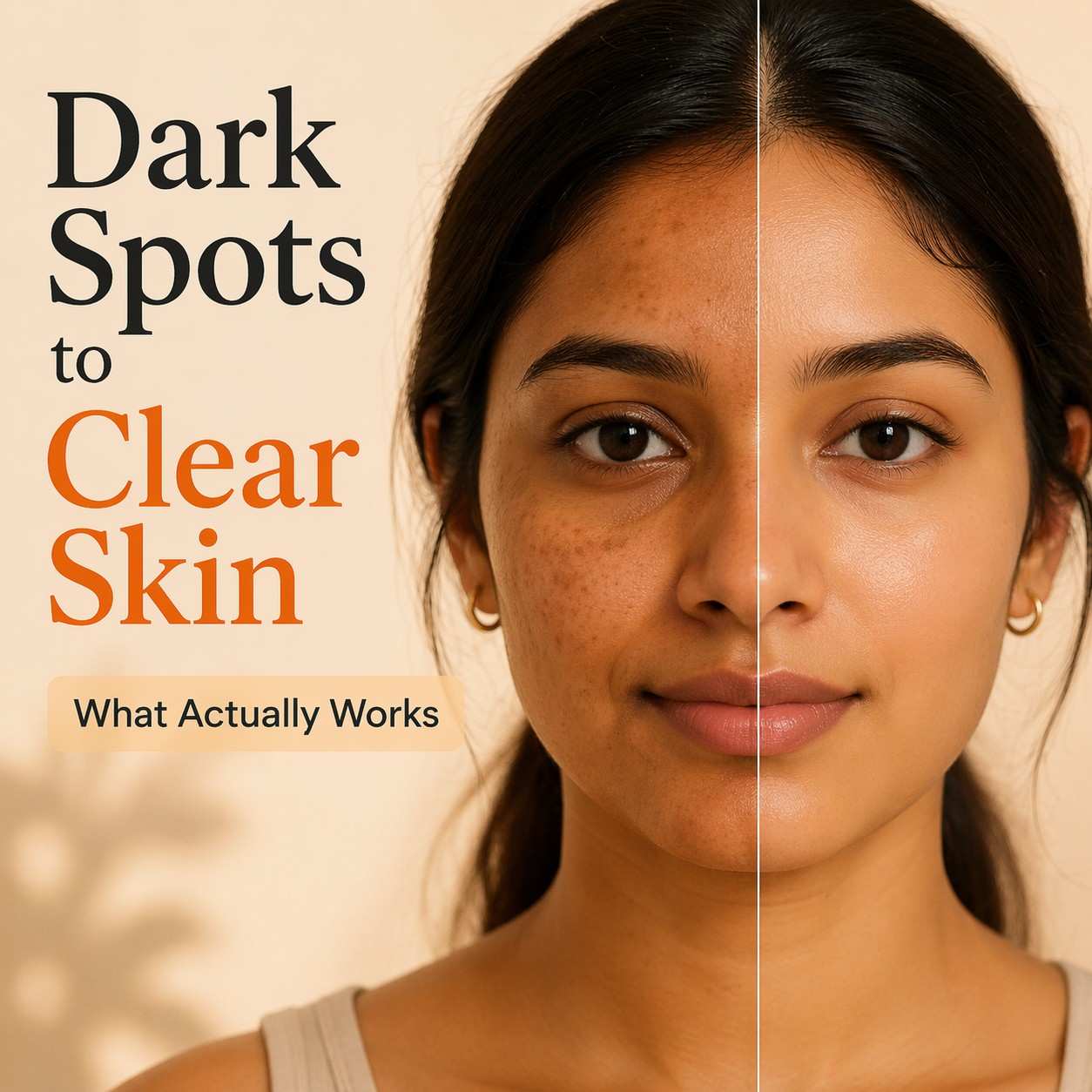
Dark spots, uneven skin tone, and pigmentation are some of the most common skin concerns, especially in India. Whether it is acne marks, sun damage, or hormonal changes, these patches can take time to fade and often feel frustrating.
This guide breaks it down simply.
- Why dark spots happen
- What actually works to treat them
- Safe routines you can follow
- Realistic timelines
How to Remove Dark Spots Naturally (What Actually Works)
Can dark spots be removed naturally?
Yes. But not overnight.
- Natural methods work slowly
- They require consistency
- Results depend on the type of pigmentation
What “natural treatment” really means
Natural does not always mean DIY.
Better approach:
- Use gentle, proven ingredients
- Follow a consistent routine
- Protect your skin daily
What actually helps
- Daily sunscreen
- Ingredients that reduce melanin
- Gentle exfoliation
- Hydration and skin repair
What Causes Dark Spots & Pigmentation on Face
The science behind pigmentation
Dark spots form due to excess melanin, the pigment that gives skin its color.
Simple breakdown:
- An enzyme called tyrosinase triggers melanin production
- Melanin is packed into cells and transferred to the skin
- When overproduced, it appears as dark patches
Common causes (especially in India)
- Sun exposure
- Acne and inflammation (PIH)
- Hormonal changes (melasma)
- Skin irritation or injury
Pigmentation happens when melanin is unevenly produced in certain areas.

Types of Dark Spots on Face
Post-inflammatory hyperpigmentation (PIH)
- Caused by acne or skin injury
- Appears as dark marks after healing
Melasma
- Hormonal pigmentation
- Appears as patches on cheeks, forehead
Sun spots (age spots)
- Caused by long-term sun exposure
- Common in exposed areas
Freckles
- Genetic
- Darken with sun exposure
|
Melasma is the most common pigmentary disorder in India, affecting approximately 20–30% of women aged 40–65 years. Contributing factors include UV exposure, hormonal changes, and genetic predisposition.
|
PIH vs Melasma: What’s the Difference?
| Factor | PIH | Melasma |
| Cause | Acne/injury | Hormonal |
| Shape | Random spots | Symmetrical patches |
| Depth | Surface level | Deeper |
| Treatment | Easier | Takes longer |
👉 Why this matters
Using the wrong treatment can worsen pigmentation.
How Dark Spot Treatments Actually Work
Effective treatments target pigmentation in 3 ways:
1. Reduce melanin production
- Block tyrosinase enzyme
2. Prevent pigment transfer
- Stops pigment from spreading
3. Increase skin turnover
- Removes existing pigment
The best routines combine all three.
Best Ingredients for Dark Spots (From Strongest to Gentlest)
A-Team (Dermatologist treatments)
- Hydroquinone
- Retinoids
⚠️ Use only under medical guidance
B-Team (Strong performers)
- Azelaic acid
- Alpha arbutin
- Cysteamine
C-Team (Gentle daily ingredients)
- Vitamin C
- Niacinamide
- Kojic Acid
👉 Best for:
- Beginners
- Sensitive skin
- Long-term use
How Niacinamide Helps Reduce Dark Spots
Niacinamide is a multi-purpose ingredient.
What it does:
- Improves skin clarity
- Refines pores
- Controls oil
- Strengthens skin barrier
It works best when used consistently and combined with other actives.
It is also suitable for all skin types and beginners
How Kojic Acid Works on Pigmentation
Kojic acid directly targets pigmentation.
What it does:
- Reduces melanin production
- Helps brighten uneven tone
Why this combination works
Niacinamide + Kojic Acid:
- Targets pigment formation
- Improves overall skin texture
- Works gently over time
|
In a study using hyperspectral imaging, kojic acid increased skin brightness in 75% of patients tested, reduced skin contrast in approximately 83%, and increased skin homogeneity in approximately 67% of patients.
|
Natural Remedies for Dark Spots: What Works & What Doesn’t
Safe natural ingredients
- Aloe vera
- Licorice extract
- Turmeric
What to avoid
- Lemon juice
- Apple cider vinegar
⚠️ These can cause irritation and worsen pigmentation
Simple Skincare Routine for Pigmentation (AM & PM)
Morning routine
- Cleanser
- Vitamin C serum
- Moisturiser
- Sunscreen
Night routine
- Cleanser
- Treatment serum
- Moisturiser
👉 Example structure:
- Morning: Vitamin C + hydration
- Night: Niacinamide-based treatment
Weekly
- Exfoliate 1–2 times
- Use gentle acids
Why Sunscreen is the Most Important Step
No treatment works without sun protection.
What to know
- UV rays increase pigmentation
- Even indoor light can trigger it
Advanced tip
- Tinted sunscreens (with iron oxides) help block visible light
Practical rule
- Apply enough sunscreen
- Reapply every 2–3 hours
How Long Does It Take to Remove Dark Spots?
Week 1–4
- Skin adjusts
- No major visible change
Month 2–3
- Spots start fading
- Skin tone improves
Long-term
- Maintenance is key
- New spots prevented
Most treatments take weeks to months, not days
Do’s & Don’ts for Treating Pigmentation
Do’s
- Use sunscreen daily
- Be consistent
- Use gentle products
Don’ts
- Over-exfoliate
- Pick acne
- Try harsh DIY remedies
Common Mistakes That Worsen Pigmentation
- Using too many actives at once
- Using unregulated “bleaching creams”
- Skipping sunscreen
- Expecting instant results
When to See a Dermatologist
Consult a professional if:
- Pigmentation is severe
- Spots spread quickly
- No results after 3–4 months
Choosing the Right Serum for Dark Spots
What to look for
- Gentle but effective ingredients
- Suitable for daily use
- Targets multiple concerns
A simple approach
A serum combining:
- Niacinamide
- Kojic Acid
can help:
- Reduce dark spots
- Improve skin tone
- Support overall clarity
You can explore a daily-use option like Tirta Care’s Niacinamide & Kojic Acid serum, designed for gentle spot correction and even-looking skin.
FAQs
1. Will home remedies work for dark spots or do I need a dermatologist?
- Mild pigmentation can improve with consistent home care
- Ingredients like niacinamide, vitamin C, and kojic acid can help over time
- For stubborn pigmentation like melasma, professional treatment may be needed
👉 If you don’t see results after 8–12 weeks, consult a dermatologist
2. How long does it take for niacinamide to show results on dark spots?
- Initial improvements can be seen in 4–6 weeks
- Visible fading usually takes 8–12 weeks
- Consistency matters more than strength
👉 Niacinamide works gradually by improving skin clarity and supporting even tone
3. Can I use Vitamin C and niacinamide together?
Yes, they can be used together safely.
Best way to use:
- Vitamin C in the morning
- Niacinamide in the night routine
👉 This helps:
- Protect skin during the day
- Repair and improve tone at night
4. Why do my dark spots come back after fading?
Dark spots can return due to:
- Sun exposure without protection
- Ongoing acne or inflammation
- Hormonal triggers (melasma)
👉 This is why sunscreen and maintenance routine are essential, even after spots fade
5. Is sunscreen really necessary even when I’m indoors?
Yes.
- UV rays can pass through windows
- Blue light and heat can also trigger pigmentation
- Without sunscreen, treatments become less effective
👉 Daily sunscreen helps prevent new spots and protects progress
6. Can lemon juice remove dark spots naturally?
No, and it is not recommended.
- Lemon juice is highly acidic
- It can cause irritation and burns
- It may worsen pigmentation over time
👉 Safer alternatives:
- Aloe vera
- Licorice extract
- Gentle active ingredients
Final Takeaway
- Pigmentation is common and treatable
- There is no instant fix
- The right routine + consistency matters most
Focus on:
- Protection
- Gentle actives
- Patience
That is what leads to clear, even-toned skin over time.