

Your skin may be asking for hydration long before it starts peeling or flaking.
Maybe your face feels tight after cleansing. Maybe your makeup looks patchy by noon. Or maybe your skin feels oily and dry at the same time. These are all signs that your skin barrier may be struggling to hold moisture properly.
A lot of people think moisturiser alone fixes dry skin. But healthy skin hydration is more than just applying a cream. Your skin needs water, barrier support, and the right ingredients layered correctly.
That is where most skincare routines go wrong.
This guide breaks down everything you need to know about hydrated and healthy skin in a simple, beginner-friendly way. You will learn:
- The difference between dry and dehydrated skin
- Why your skin barrier matters
- How ingredients like Hyaluronic Acid and Vitamin B5 help
- How to layer skincare correctly
- A simple AM and PM hydration routine
- Common mistakes that make skin more dehydrated
If your skin often feels dull, tight, sensitive, or tired-looking, this guide will help you understand what your skin actually needs.
How to Hydrate Dry Skin Properly
Healthy hydration starts with understanding what your skin is missing. Many people focus only on moisturising. But hydration and moisturising are not the same thing. Hydration refers to water content in the skin. Moisturising helps seal that hydration in.
When your skin lacks hydration, it can:
- Feel tight after washing
- Look dull and tired
- Show fine lines more visibly
- Become sensitive or irritated easily
- Produce excess oil to compensate
This is why even oily skin can sometimes feel dehydrated.
Why Skin Hydration Matters
Hydrated skin does much more than look glowy.
Proper hydration helps:
- Maintain smoother skin texture
- Support a healthy skin barrier
- Reduce dryness and irritation
- Improve elasticity
- Help skincare products absorb better
Well-hydrated skin also recovers better from environmental stress like pollution, sun exposure, and over-exfoliation.
Signs Your Skin Is Dehydrated
Not sure if your skin needs hydration support?
Here are some common signs:
- Tightness after cleansing
- Skin looking dull despite skincare
- Flaky patches around nose or mouth
- Makeup separating or looking cakey
- Skin feeling oily and dry together
- Increased sensitivity
Dehydrated skin is a condition. It can happen to any skin type.
Why Moisturiser Alone Sometimes Is Not Enough
A moisturiser helps reduce water loss. But if your skin is already dehydrated, it also needs ingredients that attract and retain water.
That is where humectants like Hyaluronic Acid become important.
Think of it this way:
- Hydrating ingredients pull moisture into the skin
- Moisturisers help lock that hydration in
Your skin usually needs both.
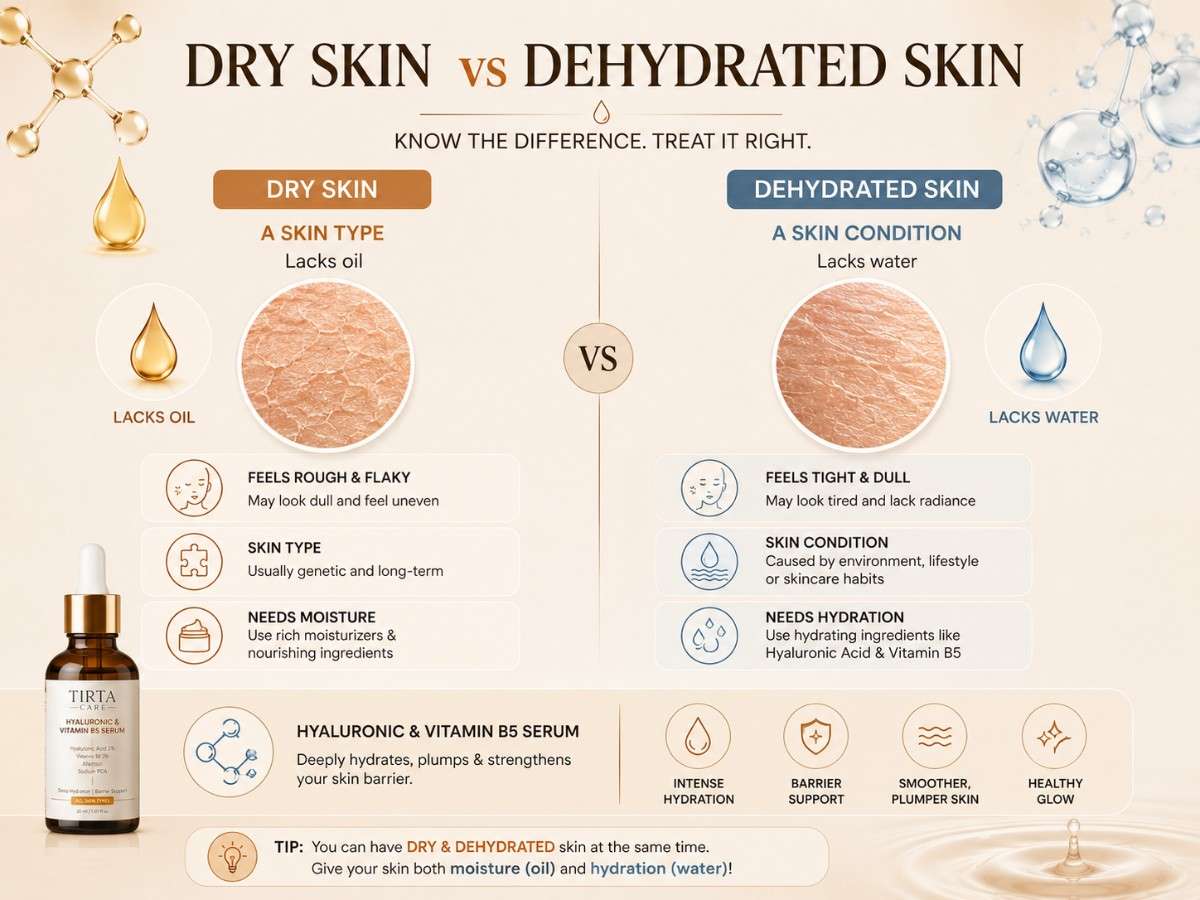
Dry Skin vs Dehydrated Skin. Understanding the Real Difference
These two terms are often used interchangeably. But they are not the same thing.
Understanding the difference helps you choose the right skincare routine.
What Is Dry Skin?
Dry skin is a skin type.
It means your skin naturally produces less oil. Dry skin often feels:
- Rough
- Flaky
- Tight
- Less supple
Dry skin usually needs richer moisturisers and lipid-support ingredients.
What Is Dehydrated Skin?
Dehydrated skin is a temporary skin condition.
It happens when your skin lacks water, not oil.
Even oily or acne-prone skin can become dehydrated due to:
- Over-cleansing
- Harsh products
- Weather changes
- Lack of hydration support
- Excessive exfoliation
Dehydrated skin often looks dull and tired while feeling tight underneath.
Can Oily Skin Be Dehydrated?
Yes. Very commonly.
When skin loses water, it may produce extra oil to protect itself. This creates the confusing combination of:
- Oily-looking skin
- Tightness underneath
- Congested pores
- Dehydration lines
This is why stripping oily skin with harsh products often makes things worse.
The Science of Skin Hydration and Skin Barrier Function
Your skin barrier is your skin’s protective shield. It helps keep moisture in and irritants out. When this barrier becomes damaged, your skin struggles to hold hydration properly.
What Is the Skin Barrier?
The outermost layer of your skin acts like a protective wall.
A healthy barrier helps:
- Prevent water loss
- Keep skin balanced
- Reduce irritation
- Protect against environmental damage
When your barrier is healthy, skin feels smoother, calmer, and stronger.
What Happens When the Skin Barrier Is Damaged
A weakened barrier increases something called Trans Epidermal Water Loss (TEWL).
That simply means your skin loses moisture faster.
This can lead to:
- Persistent dryness
- Redness
- Sensitivity
- Irritation
- Rough texture
- More visible fine lines
Common Habits That Damage Your Skin Barrier
Many hydration problems actually begin with everyday skincare mistakes.
Some of the biggest culprits are:
- Over-cleansing
- Using strong exfoliants too often
- Hot showers
- Alcohol-heavy skincare products
- Skipping moisturiser
- Not using sunscreen
Consistency matters more than aggressive skincare.
Why Hyaluronic Acid Is One of the Best Ingredients for Skin Hydration
Hyaluronic Acid has become one of the most talked-about skincare ingredients for a reason.
It is one of the best ingredients for helping skin retain moisture.
What Does Hyaluronic Acid Do for Skin?
Hyaluronic Acid is a humectant. That means it attracts water into the skin and helps hold it there.
It helps:
- Improve skin hydration
- Make skin look plumper
- Reduce dehydrated appearance
- Support smoother texture
Your skin naturally contains Hyaluronic Acid. But levels reduce over time due to age and environmental stress.
How Hyaluronic Acid Helps Retain Moisture
One of the biggest strengths of Hyaluronic Acid is its ability to bind water.
When applied properly, it helps:
- Keep skin hydrated longer
- Improve softness
- Reduce tightness
- Support elasticity
That is why it works especially well for dehydrated and tired-looking skin.
Why Damp Skin Application Matters
Hyaluronic Acid works best on slightly damp skin.
Applying it after cleansing while skin still has slight moisture helps improve hydration absorption.
Then follow with moisturiser to help seal hydration in.
Can You Use Hyaluronic Acid Every Day?
Yes.
It is one of the most beginner-friendly hydration ingredients available.
The Tirta Hyaluronic & Vitamin B5 Face Serum is designed for daily use and suitable for all skin types, especially dry, dehydrated, and sensitive skin.
Your Skin Barrier Needs Hydration, Not Harshness
Healthy skin does not come from stripping your face with strong products.
A lightweight hydration-focused serum with ingredients like Hyaluronic Acid and Vitamin B5 can help support moisture balance while keeping skin feeling soft, calm, and refreshed daily.
The Role of Vitamin B5 in Healthy, Hydrated Skin
Hydration is not just about adding water into the skin. Your skin also needs support to repair and maintain its protective barrier. That is where Vitamin B5 helps.
What Is Vitamin B5?
Vitamin B5, also called Panthenol or Provitamin B5, is known for its soothing and skin-conditioning properties.
It is commonly used in hydration-focused skincare because it helps improve skin comfort and smoothness.
How Vitamin B5 Supports Barrier Repair
Vitamin B5 helps:
- Support skin repair
- Improve softness
- Reduce roughness
- Calm stressed skin
It works especially well when paired with hydrating ingredients like Hyaluronic Acid.
Why Hydration and Barrier Repair Work Together
Hydration alone is not enough if the skin barrier remains weak.
A healthy routine should:
- Add hydration into the skin
- Help the barrier hold that hydration longer
This is why Hyaluronic Acid + Vitamin B5 combinations work well together.
The Tirta Hydration Serum combines:
- Hyaluronic Acid for moisture retention
- Vitamin B5 for smoothness and barrier support
- Allantoin & Sodium PCA for hydration balance
Best Ingredients That Help Hydrate and Strengthen Skin
Not all skincare ingredients hydrate the same way. Some pull moisture into the skin. Others help lock it in.
Ingredients That Pull Moisture Into Skin
These are called humectants. Some of the most effective ones include:
- Hyaluronic Acid
- Glycerin
- Panthenol
- Sodium PCA
They help attract water and improve hydration levels.
Ingredients That Help Strengthen the Barrier
Barrier-support ingredients help reduce moisture loss.
Look for:
- Ceramides
- Niacinamide
- Fatty acids
- Squalane
These ingredients help skin stay resilient and balanced.
Ingredients That Help Soothe Dehydrated Skin
Sensitive or dehydrated skin also benefits from calming ingredients like:
- Allantoin
- Vitamin B5
- Aloe Vera
These help reduce discomfort and improve skin feel.
How to Layer Skincare Correctly for Maximum Hydration
The order of skincare products matters more than most people realise. Incorrect layering can reduce effectiveness and sometimes worsen dehydration.
Correct Order of Skincare Products
A simple hydration-focused order looks like this:
- Gentle cleanser
- Hydrating serum
- Moisturiser
- Sunscreen (morning)
The rule is simple:
Apply thinner, water-based products before thicker creams.
Common Layering Mistakes That Cause Dehydration
Some common mistakes include:
- Applying Hyaluronic Acid on completely dry skin
- Using too many active ingredients together
- Skipping moisturiser after hydrating serums
- Over-exfoliating
Hydration routines should feel supportive, not aggressive.
Simple Morning Routine for Hydrated & Healthy Skin
A morning routine should focus on hydration and protection. You do not need a complicated 10-step routine.
Step 1: Gentle Cleansing
Use a gentle cleanser that does not leave skin feeling stripped.
If your skin already feels dry in the morning, even rinsing with water may sometimes be enough.
Step 2: Hydrating Serum
Apply a hydration-focused serum on slightly damp skin.
The Tirta Hyaluronic & Vitamin B5 Face Serum can be used both morning and night for hydration and barrier support.
Step 3: Moisturiser and Sunscreen
Finish with:
- A moisturiser suited to your skin type
- SPF 30 or higher
Sunscreen is essential because UV damage weakens the skin barrier and increases dehydration.
Night Routine for Barrier Repair and Overnight Hydration
Nighttime is when your skin naturally focuses on repair and recovery. This makes evening hydration especially important.
Double Cleanse Without Over-Stripping
If you wear sunscreen or makeup, double cleansing helps remove buildup gently.
Avoid harsh cleansers that leave skin squeaky clean.
Focus on Repair and Recovery
At night, focus on:
- Hydration
- Barrier support
- Gentle recovery
Hydration-focused serums work well here because skin loses moisture overnight.
Lock Hydration Overnight
Finish with moisturiser to help reduce overnight moisture loss.
Dryer environments or AC rooms often increase dehydration while sleeping.
Common Mistakes That Make Skin More Dehydrated
Sometimes skincare routines accidentally create more dehydration.
1. Over-Exfoliating the Skin
Using exfoliating acids too often can weaken the barrier and increase sensitivity. For most people, exfoliating once or twice a week is enough.
2. Using Harsh Cleansers
Foaming cleansers with strong surfactants can strip natural oils and worsen tightness. Your skin should feel clean, not uncomfortable.
3. Skipping Moisturiser
Hydrating serums still need support from moisturisers. Without sealing hydration in, moisture can evaporate faster.
4. Not Using Sunscreen
UV exposure weakens the skin barrier and increases moisture loss over time. Daily sunscreen is one of the most important hydration-support habits.
5. Lifestyle Habits That Support Hydrated Skin
Skincare matters. But lifestyle habits also affect hydration levels.
6. Water Intake Still Matters
Drinking water alone will not fix dehydrated skin completely. But internal hydration still supports overall skin function.
7. Sleep and Skin Recovery
Your skin repairs itself during sleep.
Poor sleep can worsen:
- Dullness
- Barrier stress
- Dehydration
- Sensitivity
Food That Supports Skin Hydration
Skin-supportive foods include:
- Fatty fish
- Nuts and seeds
- Fruits with high water content
- Vegetables rich in antioxidants
How to Choose the Right Hydrating Serum for Your Skin
Choosing the right serum becomes easier once you understand what dehydrated skin actually needs.
What to Look for in a Hydration Serum
Look for ingredients like:
- Hyaluronic Acid
- Vitamin B5
- Glycerin
- Sodium PCA
- Allantoin
These help support hydration and comfort together.
Lightweight vs Heavy Formulas
In Indian weather, many people prefer lightweight hydration instead of thick greasy creams.
A lightweight serum works well because it:
- Layers easily
- Feels comfortable daily
- Supports hydration without heaviness
Choosing a Serum for Daily Use
A good hydration serum should:
- Work morning and night
- Layer well with other products
- Support barrier comfort
- Suit sensitive skin
Hyaluronic & Vitamin B5 Face Serum is formulated specifically for lightweight daily hydration and skin barrier support.
Conclusion
Healthy skin hydration starts with understanding what your skin actually needs.
When skin is properly hydrated, it feels smoother, calmer, and healthier. Supporting your skin barrier, layering products correctly, and using hydration-focused ingredients consistently can make a noticeable difference over time.
Simple, consistent routines usually work better than aggressive skincare.
If your skin often feels tight, dull, dehydrated, or sensitive, ingredients like Hyaluronic Acid and Vitamin B5 can help support hydration and daily skin comfort.
Hyaluronic & Vitamin B5 Face Serum is designed to deeply hydrate, improve smoothness, and support the skin barrier with daily use.